Coin Bracelet Gold Plated: What to Check Before You Choose
A coin bracelet gold plated over brass or sterling silver is the most common way to get the look of a solid gold piece for a fraction of the cost. Prices usually start around 25 euros for thin plating on brass and climb to roughly 120 euros for thick plating on silver. The gap comes down to three things: plating thickness, the metal underneath and how the coins are attached.
Here is what actually decides how long the bracelet stays golden.
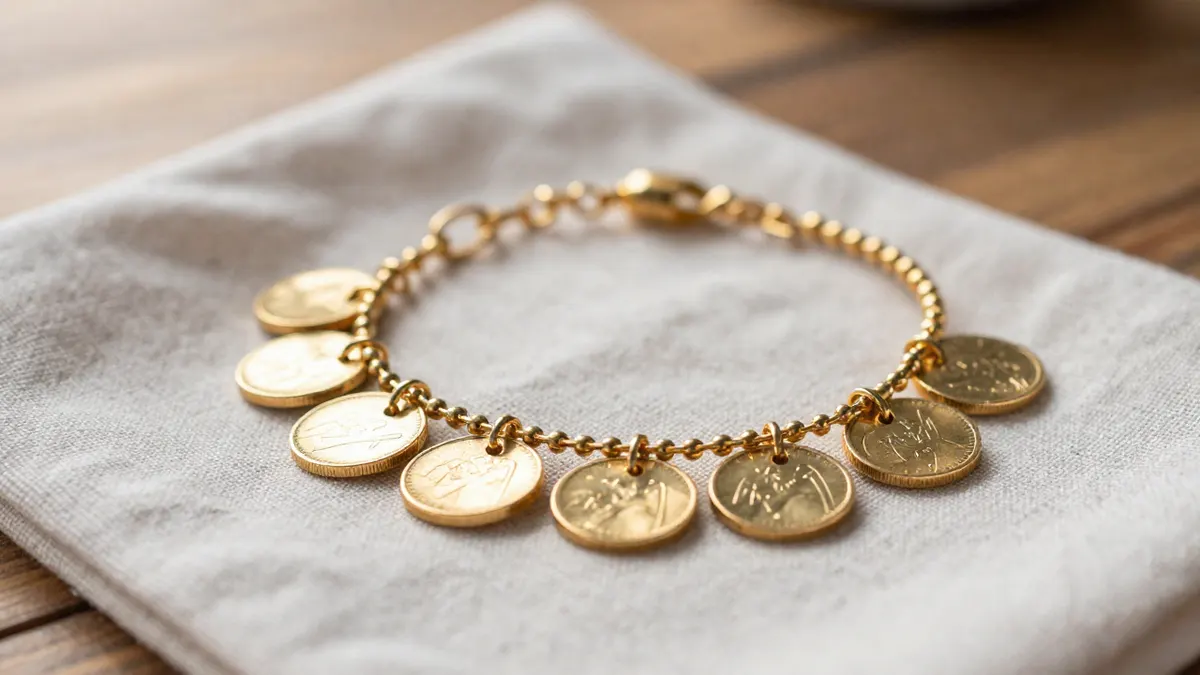
How a gold plated coin bracelet is made
Plating means a thin layer of gold is deposited on a base metal by electrolysis. The layer is measured in microns. Fashion pieces often carry 0.5 microns or less, which wears through in a few months of daily use. Better pieces reach 2.5 microns, and those can last two to three years with sensible care.
The base matters just as much. Brass is cheap and sturdy but can react with skin and leave a green mark once the gold thins. Sterling silver (925) is gentler on sensitive skin and is the usual base for the gold vermeil label, which requires at least 2.5 microns of gold in most markets.
Coins: cast, stamped or pressed
Cast coins have real relief and a bit of weight, around 1 to 2 grams each. Stamped ones are flat and light. Pressed discs with a printed or engraved face look good in photos but show scratches quickly. If the listing gives no weight, assume the lighter option.
Chain and clasp
The weak point is rarely the coin. It is the jump ring holding it. Closed, soldered rings survive years, while open split rings can pull apart. A lobster clasp is safer than a spring ring, and an extender chain of 3 to 5 cm makes the fit easier to adjust.
Gold bracelet women Europe: sizing and styles
Most women in Europe wear a bracelet between 16 and 19 cm. Measure your wrist with a strip of paper, then add 1.5 to 2 cm for a relaxed fit. A bracelet worn snug scrapes against desks and sleeves, which speeds up wear on the plating.
European buyers should also look at hallmarks. Solid gold is stamped with its fineness (375, 585 or 750), while plated jewelry carries no such mark. A listing that shows "18k" without saying whether it is solid, plated or filled deserves a question before anything else.
Styles that sell well right now include:
- A single row of small coins on a fine curb chain, easy to stack
- A cameo coin bracelet, where a carved portrait sits on each disc and gives a more vintage look
- A flat coin chain bracelet gold, closer to a classic chain with a few larger medallions
- Minimal designs such as the touch of simplicity bracelet, with one or two discreet charms
For a wavier, softer outline, a waving gold bracelet suits people who find rigid coin links too stiff on the wrist.
Caring for gold plating
Perfume, hand cream and chlorine are the main enemies. Put the bracelet on last, after sprays and lotions, and take it off before swimming, showers and workouts. Salt water is the fastest way to ruin thin plating.
Wipe it with a soft dry cloth after wearing. Store it in a small pouch, away from other jewelry, so the coins do not rub each other. Never use a toothpaste or a polishing cloth with abrasive compound, because it removes the gold along with the dirt.
Replating is possible for silver-based pieces and costs around 20 to 40 euros at a jeweler. On brass it is rarely worth the price.
Gold plated, vermeil or gold filled
The three labels are not interchangeable. Gold plated is the thinnest layer. Vermeil is plated over sterling silver with a minimum thickness. Gold filled has a layer bonded by heat and pressure that makes up about 5 percent of the total weight, so it lasts far longer, often a decade or more.
If you wear the bracelet every day, gold filled or thick vermeil is the better value even at two or three times the price. For occasional wear, standard plating on brass is fine.
Frequently Asked Questions
How long does a gold plated coin bracelet last?
Thin plating of 0.5 microns can fade in three to six months of daily wear. A 2.5 micron layer on silver typically lasts two to three years. Skin chemistry and exposure to water and perfume change those numbers a lot.
Will it turn my wrist green?
It can, mostly when the base metal is brass or copper and the plating has worn thin. A sterling silver base reduces the risk considerably. A clear coat of nail varnish on the inside is a short-term fix, not a lasting one.
Can I wear it in the shower?
Better not. Water itself is not the main problem, but soap and hard water leave residues that dull the surface and shorten the life of the plating.
What size should I pick?
Measure your wrist and add about 1.5 to 2 cm. Most adult women land between 17 and 19 cm in total length, and a chain with an extender covers small differences.