Gold Plated Earrings in Europe: What to Look For
Gold plated earrings sold across Europe share one basic structure: a base metal (brass, copper or sterling silver) covered with a thin layer of real gold. The layer is usually between 0.5 and 2.5 microns thick. Below 1 micron, expect visible wear within a few months of daily use.
Prices give a rough clue. A pair of plated studs often costs from about 15 to 40 euros, while thicker vermeil on silver tends to start around 50 euros. Anything far below that range is almost always flash plating, a coating of well under half a micron.
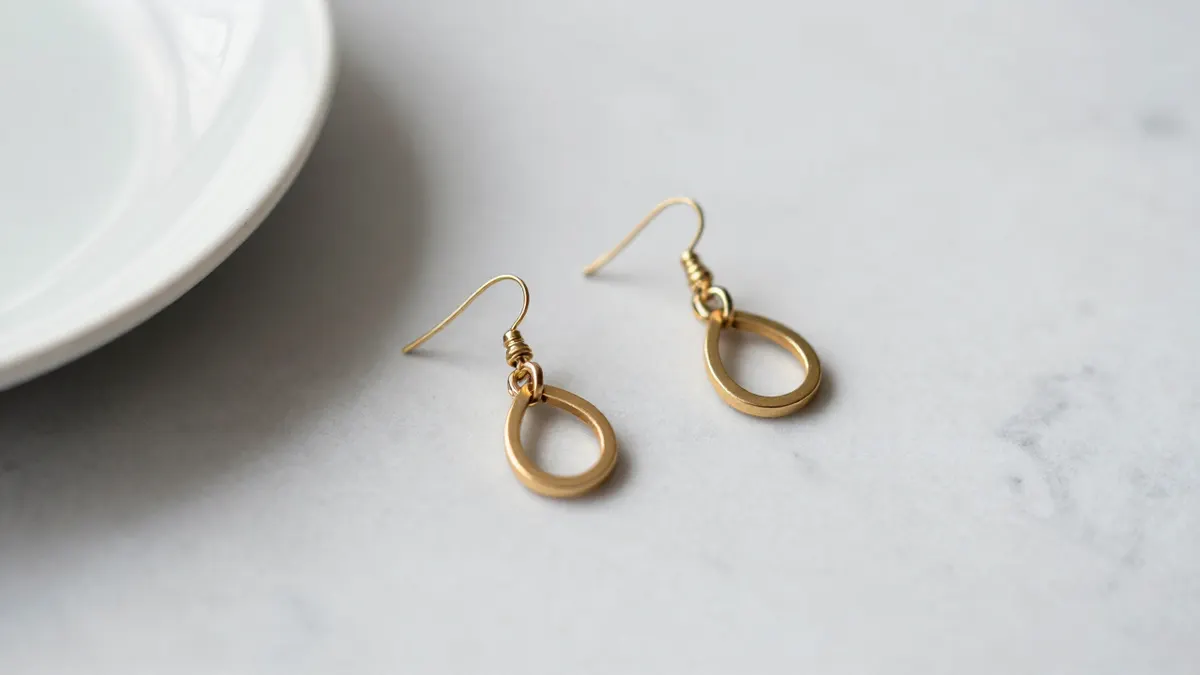
Gold plated earrings in Europe: plating, labels and skin
European rules on nickel are strict. The EU restricts nickel release from jewelry that touches the skin for long periods, including pierced earrings, so a compliant pair should be safe for most people. Sensitive ears still react sometimes, usually to brass underneath once the gold wears through.
Plated, vermeil or gold filled
These three terms get mixed up constantly. Plated means a thin gold coat over any base metal. Vermeil requires sterling silver as the base and a thicker coat, generally 2.5 microns or more. Gold filled is a bonded layer that makes up about 5 percent of the item's weight, and it lasts the longest, though it costs more.
Karat and color
Most plating is 14k or 18k gold. The higher number looks warmer and richer, but the difference in durability is small. The thickness of the layer matters far more than the karat.
Hoop earrings gold plated: sizes and weight
Hoops are the biggest category by search volume, and also the one where cheap plating shows its flaws fastest. The wire rubs against hair, collars and scarves all day.
Diameter changes the whole look. Small hoops of 10 to 15 mm sit close to the lobe and suit daily wear. Medium ones of 20 to 30 mm are the classic choice. Anything past 40 mm gets heavy, so look for hollow or tube construction, which keeps a large pair under about 4 grams.
Thick, hollow hoops dent easily, though. If you tend to sleep in your earrings, a solid thin wire is the safer pick. Textured designs such as mesh hoop earrings hide scratches better than a polished surface does, which is a real advantage for plated pieces.
- Thin wire hoops, around 1 to 2 mm: light, durable, easy to sleep in
- Chunky tube hoops, 4 to 6 mm: bold, light only if hollow
- Huggies, under 15 mm: snug and comfortable for stacked piercings
- Textured or mesh styles: best at hiding wear
Pearl earrings silver 925: how to read the label
The number 925 means the metal is 92.5 percent pure silver, the standard for sterling. It is usually stamped on the post or the back. If a pair is described as silver 925 with gold plating, the silver is the base and the gold sits on top, which is a better foundation than brass.
Pearls vary more than the metal does. Freshwater cultured pearls of 6 to 8 mm are the usual size for studs, and prices start at about 20 euros for a decent pair. Glass or shell imitation pearls look uniform and slightly too perfect, and they chip at the edge over time.
For longer styles, dangle pearl earrings gold are a good fit for evenings, since the drop moves and catches the light. Keep the drop length under about 4 cm if you want to wear them at work without them tangling in a collar.
Backs and posts
Butterfly backs hold well but can press on the ear. Larger silicone-padded backs are gentler on heavier pearls. Check that the post is at least 10 mm long and about 0.8 mm thick.
Choosing a style that fits the way you dress
Start with what you wear most. A pair of small studs works with nearly everything. Statement shapes like geometric gold earrings suit plain tops and quiet outfits, because the shape does the talking. Novelty designs, for example lock and key earrings, work best as a single point of interest and look odd next to a heavy necklace.
Weight is the detail people overlook. Anything above 6 grams per earring will pull on a standard piercing after a few hours.
Making plated earrings last
Gold plating wears from friction, sweat and chemicals. A few habits stretch the life of a pair from a few months to two or three years.
- Put them on after perfume, hairspray and lotion
- Take them off before swimming, showering and workouts
- Wipe with a soft dry cloth after wearing
- Store each pair separately in a small pouch, away from damp
Never use polishing cloths with abrasive compounds or silver dip. They strip the gold in seconds.
Frequently Asked Questions
How long do gold plated earrings last?
With daily wear, thin plating of under 1 micron may fade in 3 to 6 months. Thicker plating, treated carefully, can last two years or more. Contact with water and cosmetics shortens that most.
Are gold plated earrings safe for sensitive ears?
Often yes, especially when the base is sterling silver or surgical steel. Problems usually start once the gold wears off and a nickel-containing base touches the skin. If you react easily, choose posts labeled nickel-free or hypoallergenic.
Is vermeil better than plated?
Generally yes. Vermeil has a sterling silver base and a thicker gold layer, so it wears more slowly and is gentler on skin. It costs more, usually from about 50 euros a pair.
Can I re-plate worn earrings?
Some jewelers offer re-plating for around 20 to 40 euros per pair. It makes sense for silver or well-made pieces, but rarely for very cheap brass earrings.