Gold Plated Necklace Europe: A Practical Buyer's Guide for 2026
A gold plated necklace in Europe usually means a base of brass, copper or sterling silver covered with a thin layer of gold. The layer is the whole story. Check its thickness, the metal underneath and the finish, and you can predict how the piece will look after a year of wear.
Prices across European markets run from about 15 EUR for a basic chain to 120 EUR or more for a solid silver base with a thick coating. Most good pieces sit between 35 and 80 EUR.
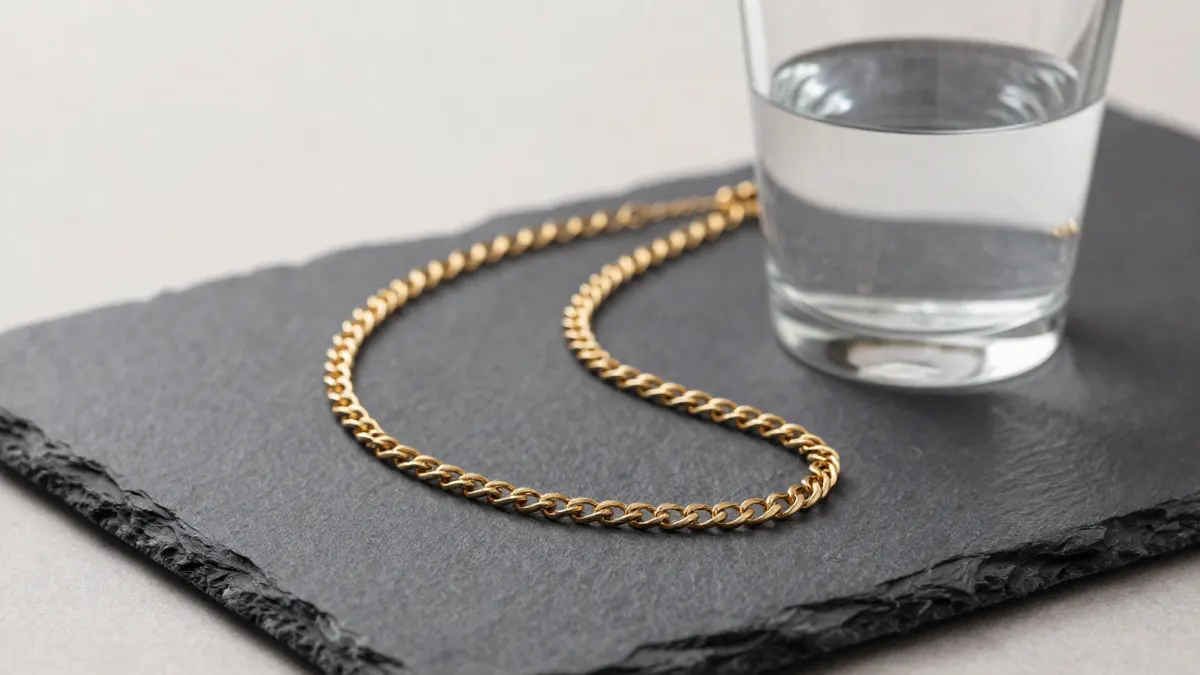
How to Choose a Gold Plated Necklace in Europe
Start with the plating. A flash coating of under 0.5 microns can fade in a few weeks, especially if you wear it daily. Pieces with 2.5 microns or more of 18k or 14k gold last far longer, often two to three years with sensible care.
The base metal matters just as much. Sterling silver (marked 925) under gold is often called vermeil when the gold layer reaches 2.5 microns. It costs more, but it is kinder to sensitive skin and keeps its shape better than brass.
What to look for on the label
- The base metal: 925 silver, brass or stainless steel
- Plating thickness in microns, and the gold purity (14k, 18k or 24k)
- Nickel-free claims, which matter in the EU because nickel release is regulated
- Chain type and clasp: a lobster clasp holds up better than a spring ring
If a seller gives none of this, assume the plating is thin. Vague wording like "gold tone" tells you very little.
Coin Necklace Gold Plated: Sizes and Wear
The coin pendant is one of the most searched shapes, and it is easy to see why. A flat round disc sits neatly at the collarbone and works with a shirt collar or a knit. Most coin pendants measure 12 to 20 mm across. Below 14 mm they look delicate, above 18 mm they start to read as a statement piece.
Because a coin is a flat, smooth surface, scratches show quickly. A brushed or hammered finish hides wear better than a mirror polish. Chain length changes the effect too: 40 cm sits high on the neck, 45 cm falls at the collarbone and 50 cm reaches the upper chest.
For a layered look, pair a coin on a 40 cm chain with a finer chain at 45 cm. The Athena necklace is a good reference for how a classical profile or medallion motif can anchor a stack without crowding it.
Pendant Necklace Silver 925: What the Stamp Means
The 925 stamp means 92.5 percent pure silver, the rest usually copper. It is the standard for quality silver jewelry in Europe. A genuine piece is typically stamped on the clasp, a small tag or the back of the pendant.
Silver tarnishes. That is normal and reversible. A soft polishing cloth removes light darkening in under a minute, and storing the piece in a sealed bag slows it down. Expect to pay from about 25 EUR for a simple 925 pendant and 50 to 90 EUR for something with stones or detailed work.
Pendants with a story attached tend to stay in rotation longer. The broken Maria necklace is one example of a design built around a symbolic, split motif, which gives the wearer something personal to read into the piece beyond the metal.
Minimalist Necklace Silver: Keeping It Simple
Minimalist silver comes down to proportions. A chain of 1 to 1.5 mm, a single small pendant of 8 to 12 mm and a clean clasp are enough. Anything thicker starts to look heavy for the style.
Rhodium plating over silver is common here. It resists tarnish and gives a bright white finish, though it can wear off at the points of contact after a year or two. Plain polished 925 is easier to restore.
Mixing metals is fine if one element repeats. A silver chain with a gold plated pendant looks deliberate, while a random mix looks accidental. The golden embrace necklace shows how a single gold motif on a slim chain can stay quiet and still read as finished.
Caring for Plated Jewelry
Plating wears fastest where it rubs: the clasp, the back of the pendant and any links that touch your clothes. A few habits slow this down considerably.
- Put the necklace on after perfume, lotion and hairspray
- Remove it for showers, swimming and workouts
- Wipe it with a dry soft cloth after wearing
- Store it flat or hanging, away from other metal pieces
Avoid harsh cleaners and ultrasonic machines. Warm water with a drop of mild soap, then a thorough dry, is enough. Once the gold has worn through, re-plating by a jeweler costs about 20 to 40 EUR, which is worth it for a silver piece and rarely for a brass one.
If you are building a matching set, lock and key earrings are a natural companion to a small pendant, since both are best kept in the same gold tone and similar scale.
Frequently Asked Questions
How long does a gold plated necklace last?
It depends on thickness and habits. A thin flash plating may last a few weeks to a few months. A 2.5 micron layer on 925 silver can last two to three years with careful wear.
Can you wear a gold plated necklace every day?
Yes, but it will age faster. Take it off to wash, sleep in it rarely and keep it away from sweat and chemicals. Rotating between two pieces extends the life of both.
Is gold plated jewelry safe for sensitive skin?
Often yes, if the base is 925 silver or stainless steel. Brass and copper bases can cause a green mark or irritation once the plating wears. Look for nickel-free labelling, which is a standard concern in the EU.
What is the difference between gold plated and gold vermeil?
Vermeil is a stricter category. It needs a sterling silver base and a gold layer of at least 2.5 microns. Standard gold plated pieces can use any base metal and a much thinner coat.
Which chain length suits a coin pendant?
Most people choose 45 cm, which lands at the collarbone. Go to 40 cm for a shorter, higher look or 50 cm if you plan to wear it over a high neckline.