Clearance Jewelry Europe: A Practical Guide to Finding Real Value
Clearance jewelry in Europe follows a predictable calendar. Retailers clear stock twice a year, with the main windows in January and July, and smaller markdowns appear after Black Friday and around late August. Discounts on end-of-line pieces usually run from about 30% to 70% off the original price, and the deepest cuts come in the final weeks of a sale.
Not every reduced piece is a bargain. Some are priced high first so the markdown looks generous. This guide explains how to read a clearance tag, which categories hold value, and what to check before you pay.
When Clearance Jewelry Sales Happen Across Europe
Dates are set by national rules, so they differ. France runs regulated winter sales from early January for about four weeks, and summer sales start in late June. Italy uses regional dates, often early January and early July. Spain and Portugal have long January sales that stretch into February. Germany has no official dates, which means markdowns can appear at any time of year, though January and July remain the busiest.
Online sellers ignore these calendars. Their clearance sections can refresh weekly. Prices in November often drop before Black Friday, then sometimes fall again in December for items that did not sell.
The best weeks to look
The first days of a sale give the widest choice of sizes. The last week gives the lowest prices. If you need a specific ring size, go early. If you are flexible, wait.
What Is Usually Discounted
Clearance stock falls into a few groups. Seasonal designs go first, such as Christmas themes or summer shell motifs. Discontinued lines follow, along with single sizes and pieces with damaged packaging. Fine jewelry in solid gold and platinum is rarely cut deep because the metal itself holds value. Fashion jewelry, plated pieces and costume items take the biggest reductions.
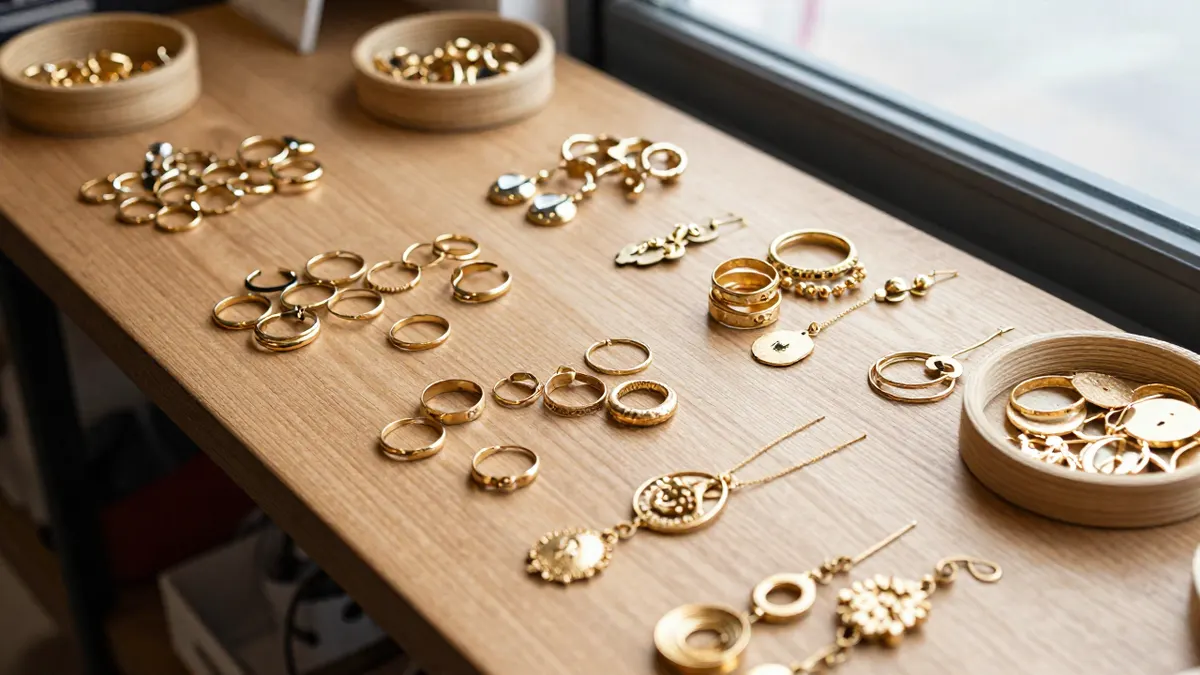
That makes plated jewelry the natural territory for clearance hunting. A pair of gold plated earrings europe shoppers see in a sale may fall from around €45 to €20, which is a fair cut when the base metal is sterling silver or stainless steel. If the base is plain brass, think twice, since skin reactions are more common and the plating wears faster.
How to Judge a Clearance Price
Look at the metal and the plating first. Sterling silver carries a 925 stamp, and good plated pieces name their base metal. Vermeil is a thicker layer of gold, at least 2.5 microns, over sterling silver. Standard gold plating can be as thin as 0.5 microns and will fade within a year of daily wear.
Then compare the sale price with the usual price from another source. A necklace marked down from €120 to €60 is only a deal if it normally sells for near €120. For a longer breakdown of what to check on chains, clasps and plating thickness, the guide to a gold plated necklace europe buyers use covers the details.
- Check for a stamp such as 925, 750 or a named plating thickness.
- Read the return policy, because many sale items are final.
- Look at the clasp and jump rings, which fail first.
- Ask whether the sale price includes VAT, usually between 19% and 25% in most EU countries.
Coin Jewelry in the Sale Bin
Coin designs are a popular trend, and trends produce clearance. Medallion pieces that sat unsold after a season often reappear at half price. If you like the style, gold plated coin bracelets are a good place to start, because the chain is easy to inspect and a lobster clasp is simple to test. Gold plated coin rings are trickier. Sizing runs inconsistently, and an adjustable band is the safer choice when you cannot try one on.
Avoid very light coins. A pendant that weighs under 1 gram usually bends, and thin edges snag on clothing.
Shipping, Duties and Returns Across Borders
Within the EU there are no customs duties, so the sticker price is close to the final cost aside from delivery, usually around €4 to €10. Orders from the UK or Switzerland may add import VAT and a handling fee, sometimes €10 or more on top. Check this before you decide a UK sale is cheaper.
EU consumers generally have 14 days to withdraw from an online purchase. Some sellers exclude sale items from free returns, though the legal right usually remains. Keep the packaging and the receipt until you are sure.
Caring for Discounted Plated Pieces
Plated jewelry lasts longer with simple habits. Remove it before showers, swimming and workouts. Store pieces separately in a dry pouch. Wipe them with a soft cloth after wearing, and keep perfume and lotion away from the surface. Treated this way, a decent plated piece can look good for one to two years.
Frequently Asked Questions
When is the best time to buy clearance jewelry in Europe?
January and July are the strongest months, as most countries hold their main sales then. For the lowest prices, shop in the final week, though sizes will be limited. Online markdowns after late November can also be good.
Is clearance jewelry lower quality?
Not always. Many items are simply discontinued or seasonal. Check the stamp, the base metal and the clasp, and the quality becomes clear regardless of the price tag.
How much can I expect to save?
Plated and fashion jewelry often drops by 40% to 60%. Solid gold and diamond pieces rarely fall below 10% to 25% off, because their materials keep their value.
Can I return sale jewelry bought online in the EU?
In most cases you have 14 days to withdraw from a distance purchase under EU rules. Some sellers set stricter terms on sale items, so read the policy before checking out.